
Looking for Children’s Dentistry in Adelaide’s North?
Call Our Children’s Dentistry specialists
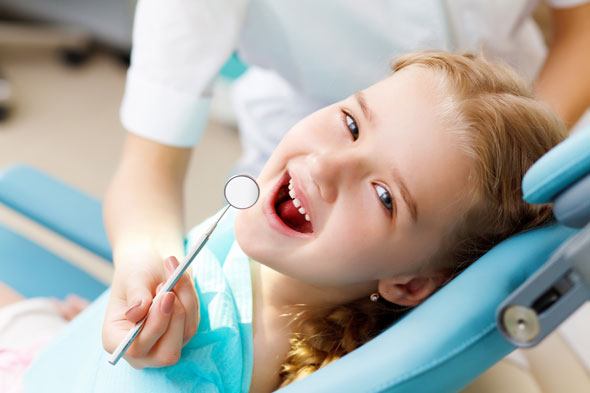
At Paralowie Dental Service, we provide gentle and professional children’s dentistry in Adelaide, ensuring that kids develop healthy teeth and good oral hygiene habits from an early age. Our family-friendly dental clinic offers a welcoming environment where children feel comfortable and at ease during their visit.
Regular dental check-ups help prevent tooth decay, gum disease, and other oral health issues. The Australian Dental Association recommends that children have their first dental visit by their first birthday or when their first tooth appears. Early dental care sets the foundation for lifelong oral health and helps kids feel confident visiting the dentist.
Our Children’s Dentistry Services
We offer comprehensive kids’ dental care to ensure healthy teeth and gums from infancy to teenage years:
1. First Dental Check-Ups & Preventative Care
- Gentle first dental visits to help kids get familiar with the dentist
- Regular check-ups & cleans to prevent cavities
- Fluoride treatments to strengthen developing teeth
- Dental sealants for cavity protection
2. Fillings & Early Decay Treatment
- Tooth-coloured fillings to restore decayed teeth
- Gentle decay removal with minimally invasive techniques

3. Orthodontic Assessments & Early Intervention
- Monitoring tooth and jaw development to detect potential alignment issues
- Early orthodontic treatment referrals if needed
4. Child-Friendly Education on Oral Hygiene
- Teaching kids how to brush and floss properly
- Advice on healthy eating habits for strong teeth
5. Emergency Dental Care for Kids
- Immediate care for knocked-out or broken teeth
- Treatment for toothaches, infections, and swelling
A Stress-Free & Fun Dental Experience
We understand that some children feel nervous about visiting the dentist. That’s why our gentle and caring team creates a positive experience using:
- A fun and friendly environment
- Gentle communication to ease fears
- Relaxation techniques to help anxious children
Medicare Children’s Dentistry Benefits Schedule
Is your child eligible for up to $1,000 value of dental care?
We recommend children should receive their first dental check-up by age 2 years of age. Our dental team can assist you to find out if your children can receive free dental care under the Medicare Child Dental Benefits Schedule.
If you would like to view our other services, please visit this link.
To book an appointment for your child please call the dental clinic on
(08) 8280 9611.
Read more patient reviews on Google
These are the most common questions asked about Children’s Dentistry
Firstly you want to use a toothbrush with very soft bristles & a small brush head. You can find infant toothbrushes in your local chemist & in most supermarkets.
You should get in the habit of doing it once a day at night during bath time.
Start this as soon as teeth come through so your baby gets used to it early on to help create good habits.
The brushing itself should be soft.
Your first dental visit should be around your child’s first birthday. All dentists recommend something similar to this.
By 1 most of the baby teeth should be out or starting to come out, and having your baby go to the dentist when you go will bring familiarity with the smells, sounds, and process over time, to make their first real experience at the dentist easier.
Baby bottle tooth decay is a pattern of rapid decay associated with prolonged nursing. It happens when a child goes to sleep while breastfeeding and/or bottle-feeding.
During sleep, the flow of saliva is reduced and the natural self-cleansing action of the mouth is diminished. Avoid nursing children to sleep or putting anything other than water in their bedtime bottles.
Encourage your child to drink from a cup as they approach their first birthday. He/she should be weaned from the bottle at 12-14 months of age.
Thumb and dummy sucking habits that go on for a long period of time can create crowded, crooked teeth or bite problems. If they are still sucking their thumbs or fingers when the permanent teeth arrive, a mouth appliance may be recommended by your dentist. Most children stop these habits on their own.
It is recommended that toothpaste with fluoride should not be used until your child is 3 years of age. Before this age use either water or infant toothpaste which can be bought at the chemist or supermarket. (only us a very small amount when you do use infant toothpaste or even normal toothpaste if they are 3 years or older)
Comfort your child, rinse his/her mouth with warm saltwater and apply a cold compress or ice wrapped in a cloth on your child’s face if it is swollen.
Do not put heat or aspirin on the sore area, but you may give the child, children’s Panadol for pain. See us as soon as possible.
With contemporary safeguards, such as lead aprons and high-speed film, the amount of radiation received in a dental X-ray examination is extremely small.
Even though there is very little risk, pediatric dentists are particularly careful to minimize the exposure of child patients to radiation. In fact, dental X-rays represent a far smaller risk than an undetected and untreated dental problem.
Mouthguards are a top priority if your child is playing a sport. Mouth Guards protect the teeth, lips, gums from injury. We can custom fir the mouth guard as well so if you do want one please give us a call.
First of all, remain calm. If possible, find the tooth and hold it by the crown rather than the root.
Replace the tooth in the socket and hold it there with clean gauze or a washcloth. If you can’t put the tooth back in the socket, place the tooth in a clean container with milk and take your child and the glass immediately to the dentist.
The faster you act, the better your chances of saving the tooth.
Sore gums when teeth erupt are part of the normal eruption process in babies. The discomfort is eased for some children by the use of a teething biscuit, a piece of toast, or a frozen teething ring.
Your pharmacy should also have medications that can be rubbed on the gums to reduce the discomfort. One of the most recommended tooth gels in Adelaide is the “Women’s & Children’s Teething Gel”
Primary, or “baby,” teeth are important for many reasons. Not only do they help children speak clearly and chew naturally, they also aid in forming a path those permanent teeth can follow when they are ready to erupt.
Some of them are necessary until a child is 12 years old or longer.
Pain, infection of the gums and jaws, impairment of general health, and premature loss of teeth are just a few of the problems that can happen when baby teeth are neglected.
Also, because tooth decay is really an infection and will spread, decay on baby teeth can cause decay on permanent teeth.
Proper care of baby teeth is instrumental in enhancing the health of your child.
Four things are necessary for cavities to form —
- A tooth,
- Bacteria
- Sugars or other carbohydrates and
- Time
Dental plaque is a thin, sticky, colorless deposit of bacteria that constantly forms on everyone’s teeth.
When you eat, the sugars in your food cause the bacteria in plaque to produce acids that attack the tooth enamel.
With time and repeated acid attacks, the enamel breaks down and a cavity forms.
Diet & oral hygiene are the main drivers of tooth decay. If you do not brush often and eat foods with high sugar contents you will be at more risk.